The Evolution of Sound Design and Atmos Mixing in Bangladeshi Cinema: From Tin-Shed ADR to Immersive Spatial Audio
How thirty years of acoustic engineering—from BFDC's noisy flatbeds and echoey dubbing booths to Toofan's thunderous multi-object Dolby Atmos theatrical mix—revolutionized cinematic immersion in Dhaka.

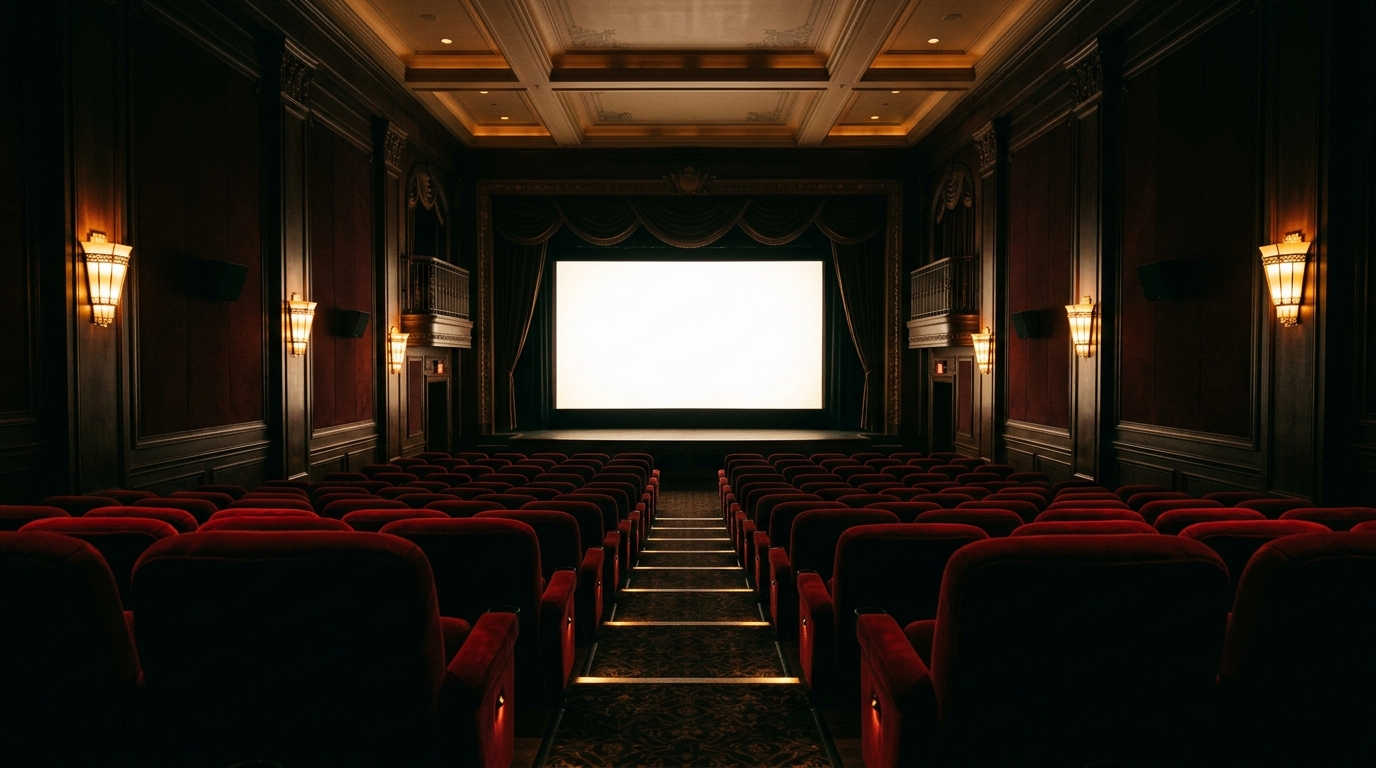
Where physical acoustic energy meets psychological space: Multi-channel overhead loudspeaker arrays at Star Cineplex SKS Tower calibrated for modern Dhallywood blockbusters.
“Sound is fifty percent of the cinematic experience, but it communicates with one hundred percent of the human subconscious. In the editing room, when you cut an image, the mind analyzes. When you shift the acoustic space, the nervous system reacts instantly.”
The Monophonic Reign: Why BFDC Relied on Studio Dubbing
To understand the leap into Dolby Atmos, one must first confront the acoustic cage that imprisoned Bangladeshi commercial cinema for nearly half a century. From the golden era of the 1960s through the late 1990s, virtually every dialogue uttered on a Bangladeshi silver screen was not recorded on set. It was manufactured in post-production.
This was not an artistic choice; it was an engineering necessity. The Bangladesh Film Development Corporation (BFDC) sound stages were furnished with heavy, mechanically noisy Mitchell BNC and Arriflex 35 II film cameras. Their internal spinning shutters, coupled with buzzing carbon arc lamps and deafening diesel generators placed too close to the sound stage doors, generated a constant 65-decibel mechanical roar. On-set dialogue was fundamentally unrecordable.
Consequently, Dhallywood adopted a complete Automatic Dialogue Replacement (ADR) and Dubbing culture. Actors would complete physical production weeks or months prior, only to stand in small, acoustically deadened booths at BFDC, matching their voices to projected silent film workprints.
The Structural Symptoms of Legacy BFDC Audio
- Detached Vocal Acoustic: Dialogue was recorded dry in a vocal booth, completely devoid of the physical room impulse response of the visual scene (e.g. rain, wind, or village courtyard).
- Stock Sound Library Recycling: Gunshots, tire skids, and physical punches were sourced from a handful of mono optical tape cartridges repeatedly duplicated across hundreds of movies.
- Optical Track Compression: Final release prints were married to 35mm photographic optical tracks with severe band-pass limits (typically rolled off sharply below 100 Hz and above 7 kHz).
The consequence was an unavoidable theatricality. Because natural whispered subtleties were swallowed by optical hiss, actors had to project their voices with exaggerated operatic cadence. Cinematic realism was acoustically impossible.
The Sync Sound Rebellion: Masud, Farooki, & Acoustic Realism
The rupture began at the dawn of the millennium. Independent auteurs recognized that true cinematic truth could not exist if the environment was stripped of its acoustic fingerprint.
In 2002, Tareque Masud and producer Catherine Masud delivered Matir Moina (The Clay Bird), which won the FIPRESCI International Critics' Prize at the Cannes Film Festival. Rather than relying on BFDC booths, the production deployed analog Nagra recorders and Sennheiser directional shotgun microphones into rural Kushtia. For the first time on a global stage, an international audience heard the visceral, organic textures of Bangladesh: the hollow slap of river water against wooden country hulls, the rhythmic rustle of dry jute leaves, and the fragile, uncompressed timbre of human speech.
Simultaneously, Mostofa Sarwar Farooki spearheaded the urban “Chhobial” revolution with films like Bachelor (2004), Made in Bangladesh (2007), and Third Person Singular Number (2009). Farooki attacked the theatrical cadence of Dhallywood dialogue directly. Characters spoke with colloquial Dhaka street slang, overlapped their sentences, muttered under their breath, and spoke over the blare of CNG three-wheelers.
Then came Giasuddin Selim's Monpura (2009), where sound designer Ripon Nath cemented sync-recording and bespoke Foley as the gold standard of modern cinema. Monpura proved to producers that naturalistic sound was not an academic exercise—it was a massive commercial magnet that grossed millions across multiplexes and single screens alike.
Feature Film 6-Stem Audio Architecture (Pro Tools HDX Stems)
Stem Breakdown: DX • Dialogue & ADR
Anchors the human emotional narrative. In modern Dhaka productions, 32-bit float sync sound is cleaned via spectral de-noising and blended with matching convolution ADR.
The 5.1 Shift: Aynabaji, Dhaka Attack, & Theatrical DCP
Between 2012 and 2016, physical celluloid 35mm film vanished from Bangladesh. In its place came the Digital Cinema Package (DCP), bringing pristine uncompressed 24-bit / 48kHz multi-channel LPCM audio straight into newly constructed multiplexes like Star Cineplex and Blockbuster Cinemas.
This technical leap culminated in Amitabh Reza Chowdhury's Aynabaji (2016). Ripon Nath's sound design, which won the National Film Award for Best Sound Recording, transformed Old Dhaka into an acoustic character. In the film, Chanchal Chowdhury's chameleon protagonist navigates claustrophobic print shops, prison barracks, and teeming bazaar streets. The mix made pioneering use of the 5.1 surround soundfield:
- Left/Right Panning: Rickshaw bells and street hawker cries dynamically panned across the front soundstage to establish physical geometry.
- Rear Surround Ambience: The buzzing neon tubes of the interrogation cell and damp courtyard mosquitoes lived exclusively in the left and right surround channels, enveloping the theater.
- Sub-Bass (LFE): The psychological heartbeat that accelerates before each identity switch rattled the subwoofers with kinetic urgency.
The following year, Dipankar Dipon's Dhaka Attack (2017) introduced modern tactical action sound design: multi-layered assault rifle muzzle blasts, SWAT door breeches, and directional police motorcade sirens mastered to international theatrical loudness standards.
The OTT Watershed: Headphone Intimacy & Psychoacoustics
When the global pandemic accelerated the rise of local streaming platforms like Chorki, Hoichoi, and Binge, post-production engineers faced a radical shift in listening topology. Audiences were no longer sitting 30 feet away from calibrated horn-loaded theater speakers. They were listening through in-ear monitors, AirPods, and smartphone speakers at 2:00 AM.
In the editing suites of JAP Studios, working on landmark episodic series including August 14 (2020), Syndicate (2022), and Mohanagar 2 (2023), our sound architecture adapted to binaural psychoacoustics.
In Mohanagar 2, Ashfaque Nipun's narrative was confined to a claustrophobic police station over a single night. The acoustic storytelling depended not on massive explosions, but on the microscopic detail of guilt: the hollow hum of a ceiling fan, the distant clack of a typewriter in another room, and Mosharraf Karim's raspy, fatigued vocal delivery. In headphone mixes, every millisecond of reverb decay had to be tailored so the voice felt uncomfortably close to the listener's ear.
The Spatial Frontier: Dolby Atmos in Surongo & Toofan
In traditional channel-based audio (stereo, 5.1, or 7.1), sound is sent directly to specific speakers. If a helicopter flies overhead, the sound engineer must manually crossfade between front and rear channels, hoping the listener's brain pieces together the illusion of altitude.
Dolby Atmos completely dismantles channel-based mixing. Instead of audio tracks, sounds are treated as discrete audio objects. Each sound is encoded with precise three-dimensional metadata: an X-axis (left/right), a Y-axis (front/rear), and crucially, a Z-axis (overhead ceiling height). The cinema's Dolby Atmos Rendering and Mastering Unit (RMU) then renders these objects dynamically across up to 64 individual speaker feeds.
Acoustic Hemispherical Object Panner
Spatial Mixing Insight (ATMOS714): Dolby Atmos treats sounds as dynamic XYZ coordinate objects rather than fixed speaker channels. Up to 128 simultaneous objects are positioned anywhere in 3D space, utilizing the 4 overhead ceiling speakers to render vertical height, ricochets, and weather with visceral realism.

Surongo
Designing a subterranean acoustic environment where complete silence and hyper-isolated mud/sand shovel scrapes had to convey terror without relying on musical score.
Stripped away melodic stems in the excavation scenes; panned physical shovel scrapes and sand trickles across top overhead Dolby Atmos ceiling speakers to simulate the earth caving in.

Toofan
Balancing a high-velocity M134 rotating minigun firing 50 rounds per second against high-energy orchestral scoring and dialogue without phase cancellation or acoustic crowding.
Separated acoustic frequencies: anchored dialogue in center, routed minigun ballistics across 3D ceiling and surround objects, and tuned LFE sub-bass to 28-60 Hz hits.
The Anatomy of a Modern Studio Audio Pipeline
Today, post-production studios in Dhaka run international-standard audio pipelines that bridge on-set field recording directly to theatrical Dolby Atmos print-masters:
On-set recording utilizes Sound Devices Scorpio and 833 32-bit floating-point recorders. 32-bit float eliminates analogue clipping during unexpected shouting or gunfire while capturing whisper-level signals with zero preamp noise floor. Wireless talent mics (Wisycom, Lectrosonics) paired with DPA 6060 capsules provide invisible placement.
As video editors, our picture lock exports a linked AAF (Advanced Authoring Format) containing the full multi-track production audio with original timecode, clip metadata, and handles. This ensures the sound supervisor receives every boom mic and lavalier channel used on set.
Urban Dhaka shooting locations suffer from ubiquitous generator whine and honking. Neural machine learning tools (Spectral De-noise, Dialogue Isolate, Ambience Match) strip intrusive noise while preserving formants and vocal warmth.
The re-recording mixer compiles up to 128 simultaneous audio objects in an RMU. The master is rendered as an ADM BWF (Audio Definition Model Broadcast Wave File) for DCP packaging, with automatic downmix metadata for 7.1, 5.1, and headphone spatial audio rendering.
The Next Horizon: AI Stem Separation & Virtual Acoustics
As we look to the next decade, sound design in Bangladeshi cinema is crossing into computational acoustics. Neural networks now permit zero-latency stem isolation, allowing sound designers to isolate footsteps recorded during on-set dialogue without re-recording in a Foley pit.
Furthermore, the arrival of Virtual Production with Unreal Engine in Dhaka studios allows real-time ray-traced acoustic simulation. When a character moves from a carpeted bedroom to a cavernous marble ballroom on an LED volume stage, the digital reverb can automatically morph its convolution impulse response in real time, matching the virtual set with mathematical perfection.
Conclusion: The Invisible Half of Cinematic Storytelling
When audiences recount their memories of Toofan or Surongo, they speak of Shakib Khan's swaggering stride or Afran Nisho's frantic gaze in the dark. But if you mute the theatrical audio, the magic dissolves. The terror in the bank vault becomes a man playing in mud; the gunfire in the ballroom becomes flashing lights on a soundstage.
Sound is what transforms moving photographs into physical reality. From the static-hissing optical tracks of BFDC to the spatial hemisphere of Dolby Atmos, Bangladeshi cinema has finally mastered the invisible art. And as filmmakers, our journey continues to ensure that every cut, every whisper, and every ricochet carries the power to captivate audiences across the world.
Jobayar Abir Peal
Founder, JAP Studios
With over 12 years of continuous leadership in Bangladeshi entertainment, Jobayar Abir Peal has served as Chief Editor on record-breaking blockbusters including Toofan (50+ Cr BDT), Surongo, Mohanagar 2, Syndicate, and August 14. Through JAP Studios, he directs high-concept fiction and oversees full-pipeline post-production for major studios.